
Replacement Systems That Improve Drainage Performance
Septic System Replacements in Silex for failed drainage fields, undersized tanks, and outdated systems on older rural homes
Recurring backups that persist after repairs, drainage fields that no longer absorb wastewater, and undersized tanks that can't handle household occupancy all indicate a septic system has reached the end of its functional lifespan. Replacement involves complete excavation and removal of the failed system, site grading to prepare for improved drainage patterns, and installation of a properly sized system designed for long-term durability. Bruce Tucker & Sons Septic Systems and Grading LLC upgrades septic systems on older homes and rural properties where aging components, increased household use, or soil saturation have caused repeated failures.
The replacement process includes evaluating current system failures, designing a new layout that addresses drainage problems and capacity needs, coordinating excavation and site preparation, and installing components that meet Missouri code requirements. On properties where the original drainage field location is no longer viable due to soil compaction or site changes, replacement allows repositioning for better long-term performance.
Arrange a site visit to review replacement options and confirm system sizing for your property.
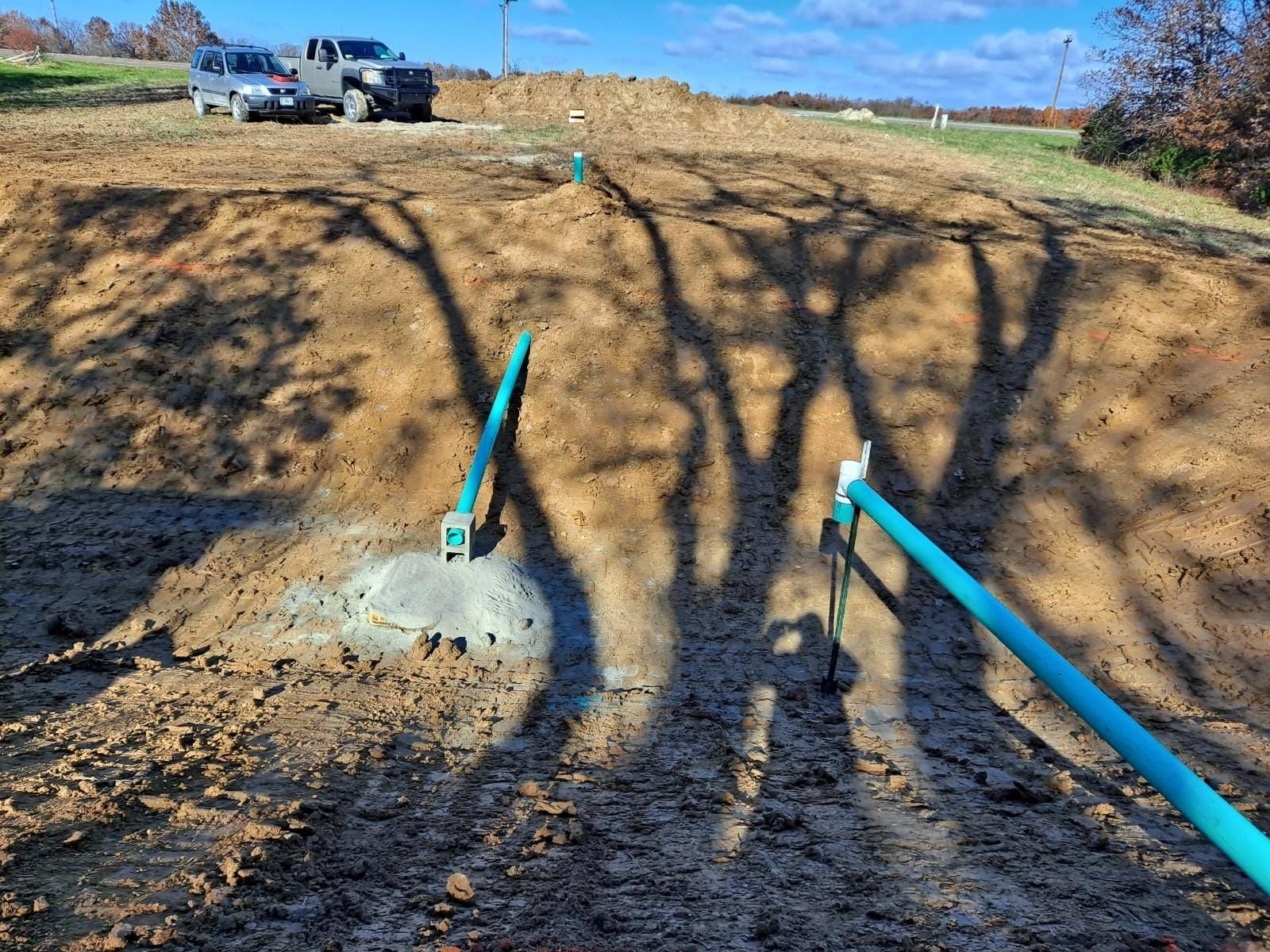
Why Replacement Works for Long-Term Durability
Replacement work begins with excavating and removing the old tank and distribution lines, grading the site to correct drainage issues that contributed to the original failure, and installing a new tank sized according to household occupancy and water usage. Drainage field placement is adjusted if soil conditions or site constraints affected the previous system's performance.
After replacement, the system handles household wastewater volume without strain, drains operate normally throughout the home, and the drainage field remains dry on the surface even during heavy use or wet weather. You eliminate recurring repair costs and the disruption of frequent service calls, and the property gains a compliant system that supports long-term occupancy.
Replacement recommendations balance code compliance, site-specific functionality, and customer budget constraints. Full coordination of excavation and grading ensures the new system integrates with existing property features, utilities, and landscaping with minimal disruption outside the immediate work area.
Questions Before Starting Your Project
Homeowners dealing with aging or failed systems want to understand when replacement makes sense and what the process involves.
What signs indicate a septic system needs replacement rather than repair?
Repeated drainage field failures, widespread component deterioration, chronic backups that don't resolve with repairs, and undersized tanks that no longer meet household needs all point toward replacement.
How is the new system sized for an older home?
Sizing depends on the number of bedrooms, current and expected occupancy, water usage patterns, and whether additions or increased household demands have outgrown the original system capacity.
Why does soil condition affect replacement planning in Silex?
Clay soils with poor percolation require larger drainage fields or alternative system designs to handle wastewater absorption, especially on properties where the original field failed due to saturation.
What happens to the old system during replacement?
The old tank is pumped, excavated, and removed from the property, and distribution lines are pulled up during site grading to prepare for the new installation.
When should replacement be scheduled for minimal disruption?
Replacement works best during dry weather when soil conditions allow efficient excavation and grading, typically late spring through early fall in Missouri.
Bruce Tucker & Sons Septic Systems and Grading LLC provides honest recommendations and quality workmanship for septic system replacements throughout eastern Missouri. Call to discuss replacement solutions for your property's septic problems.