Utility Trenching Done Before Construction Begins
Electric Line Installation in Silex for new homes, shops, barns, and mobile home sites requiring underground power service
Underground electric lines require trenching that protects conduit from damage while maintaining the depth and path specifications utility providers require before they'll connect service. Property owners preparing sites for new construction in Silex work with Bruce Tucker & Sons Septic Systems and Grading LLC for trenching, excavation, conduit placement, and utility coordination that streamlines the overall development timeline. Safe excavation practices prevent damage to existing infrastructure, and attention to detail during installation ensures conduit remains properly positioned and protected throughout the backfill process.
The work begins with utility locates to mark existing underground lines, followed by trenching along the approved path to the depth the power company specifies. Conduit is placed in the trench with bedding material that prevents shifting, and warning tape is installed above the conduit to alert future excavators. The trench is then backfilled and compacted in layers to prevent settling that could damage the conduit or create depressions in the surface above.
Request a site evaluation to review utility paths and excavation requirements for your electrical service installation.
What Changes After Underground Electric Installation
Electric line installation involves coordinating with the utility company to confirm conduit specifications, trench depth, and connection point locations before any excavation begins. Rural Missouri properties often require trenching across sloped or rocky terrain, where excavation equipment must maintain stable trench walls and accurate depth despite uneven ground conditions. Each section of conduit is inspected before backfilling to verify proper alignment and protection, reducing the risk of damage during the final grading or construction phases.
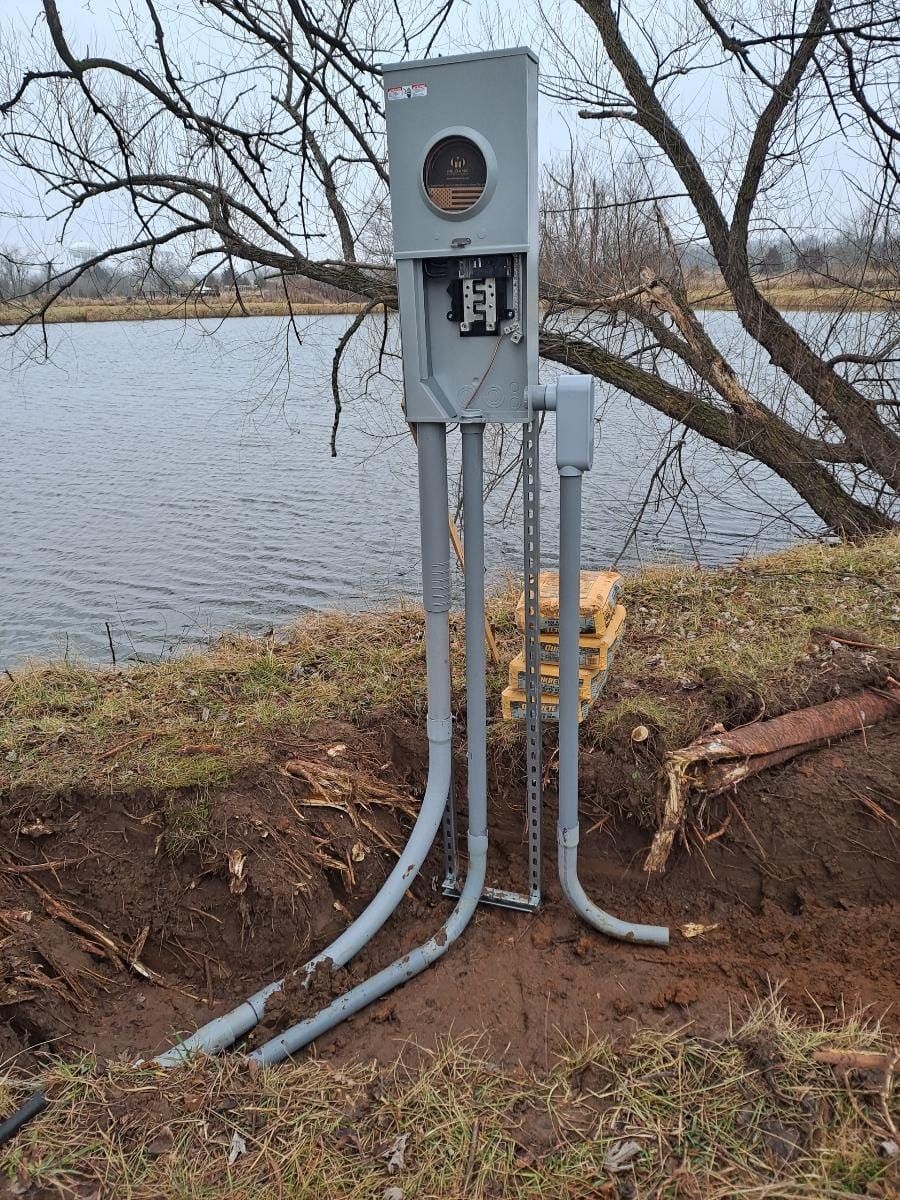
Once the installation is finished, the conduit runs continuously from the utility connection point to your service panel location without gaps or low spots where moisture could collect. The surface above the trench settles uniformly because the backfill was compacted properly, and you have clear documentation of the line's path for future reference during landscaping or additional construction work. The utility provider can proceed with final connection without delays caused by improper conduit placement or trench preparation issues.
Utility trenching can be scheduled alongside water line installation, septic system work, or driveway grading when multiple site preparation tasks need to happen before construction starts. This coordination reduces repeated mobilization costs and limits the time your property remains actively under excavation.
Common Questions About This Service
Property owners needing new electrical service often ask about the trenching process and how utility coordination affects project timing.
What happens during underground electric line installation?
The process includes obtaining utility locates, trenching to the required depth along the approved path, placing conduit with proper bedding and warning markers, coordinating inspections with the power company, and backfilling the trench with compacted material.
How does trenching differ for electric lines compared to water lines?
Electric conduit typically requires shallower trenching than water lines but follows stricter path requirements set by the utility provider, with specific rules about bends, slopes, and proximity to other underground infrastructure.
Why is utility coordination important before trenching begins?
The power company must approve the connection point, conduit type, trench depth, and installation path before work starts, and they'll inspect the installation before allowing final service connection to ensure code compliance and safety standards are met.
What challenges does rural terrain create for electric line installation in Silex?
Uneven ground, rocky soil layers, and long-distance runs from the utility pole to the structure require equipment that can maintain accurate trench depth and stability across varied conditions without damaging the conduit during placement or backfill.
How does electric line installation fit into overall site preparation?
Utility trenching is typically completed after initial grading establishes site access but before final surface work or construction begins, allowing all underground infrastructure to be in place before heavy building equipment arrives on site.
Bruce Tucker & Sons Septic Systems and Grading LLC provides underground electric line installation for residential and rural properties throughout Silex, with excavation and utility coordination experience suited to new construction and site development projects. Arrange a consultation to discuss utility planning and trenching requirements for your property.