Slope Control That Stops Erosion Damage
Retaining Walls in Silex for sloped yards, driveway support, erosion control, and properties losing usable space to grade changes
Retaining walls hold soil in place on sloped properties where erosion washes away topsoil, undermines driveways, or limits the amount of level ground available for structures and landscaping. Bruce Tucker & Sons Septic Systems and Grading LLC installs retaining walls in Silex for drainage improvement, slope stabilization, and expanded usable property space through durable construction methods and design recommendations tailored to each site's terrain. Missouri properties with elevation changes often benefit from retaining walls that control water movement and prevent the long-term soil loss that makes slopes steeper and more unstable over time.
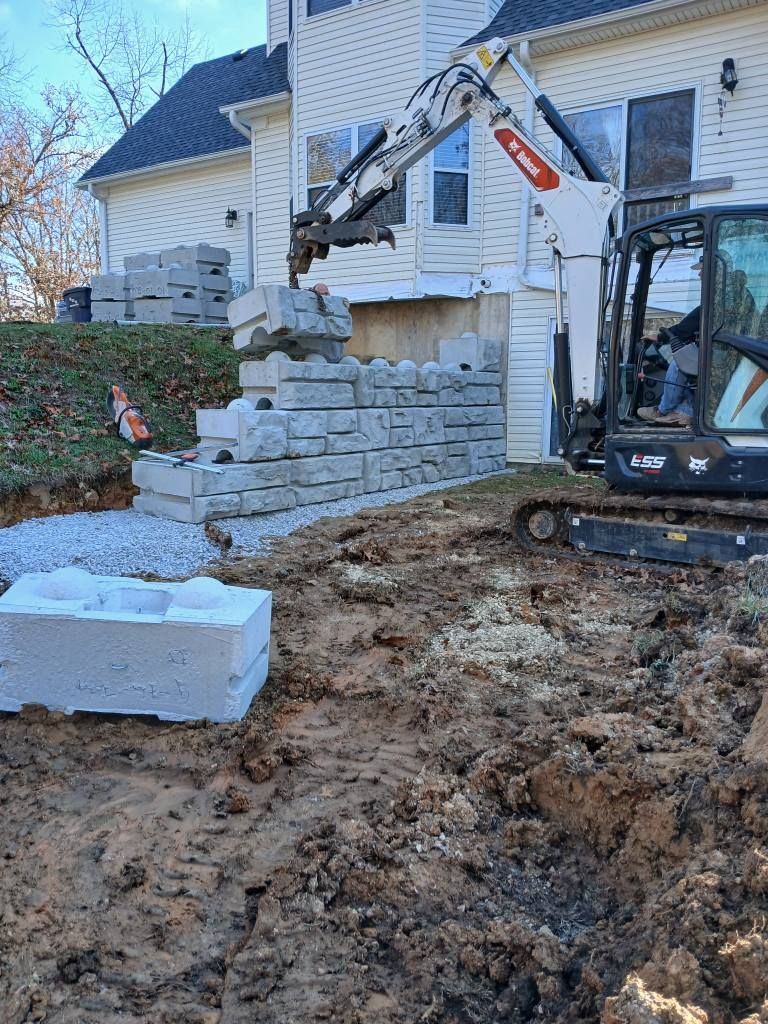
Installation involves excavating to stable soil, establishing a level base, and constructing the wall with materials that resist pressure from the retained soil and water flow behind the structure. Proper drainage design includes weep holes or drainage pipe that prevent hydrostatic pressure from building up and pushing the wall forward. The retained area is backfilled with material that drains well, reducing the weight and moisture load the wall must support.
Schedule a site evaluation to review slope conditions and retaining wall options for your property.
What Retaining Walls Actually Accomplish
Retaining wall construction begins with evaluating the slope's angle, soil type, and drainage patterns to determine wall height, setback requirements, and the type of foundation needed for long-term stability. Walls built on properties with clay soils must account for expansion pressure during wet periods, while sandy soils require deeper foundations to prevent undermining. Each wall is positioned to work with the property's natural water flow rather than blocking it entirely, using drainage features that relieve pressure and extend the structure's functional life.
After the wall is complete, the slope no longer erodes during heavy rain because the soil is held in place by the structure and water moves through controlled drainage paths instead of washing across the surface. You gain level areas that can support landscaping, parking, or structures where previously only steep, unstable ground existed. Driveways built above or below retaining walls remain intact because the soil supporting them no longer shifts or washes away during storms.
Retaining walls are often installed as part of larger grading projects where excavation work creates elevation changes that need permanent support structures. The walls can be designed to match property aesthetics while serving the functional purpose of controlling water and stabilizing soil on sites with challenging terrain.
What Property Owners Usually Ask
Homeowners dealing with slope and drainage problems frequently have questions about how retaining walls address erosion and stability concerns.
What makes retaining walls necessary on sloped properties?
Retaining walls become necessary when natural slopes are too steep to remain stable, when erosion is actively removing soil and threatening structures or landscaping, or when you need to create level areas on property with significant elevation changes.
How does drainage design affect retaining wall performance?
Walls without proper drainage fail when water pressure builds up behind them, so installation includes weep holes, drainage pipe, or gravel backfill that allows water to escape rather than pushing against the structure during wet weather common in Silex.
What factors determine retaining wall height and placement?
Wall height depends on the slope angle and how much level area you need to create, while placement is determined by property lines, existing structures, utility locations, and the soil conditions at different elevations on your property.
How do retaining walls reduce erosion on Missouri properties?
The walls hold soil in place during rain events that would otherwise wash material downslope, and they redirect water flow to controlled drainage paths that prevent concentrated runoff from cutting channels through the landscape.
What ongoing maintenance do retaining walls require?
Walls need periodic inspection to ensure drainage features remain clear, backfill hasn't settled or eroded, and the structure shows no signs of movement or damage that could compromise its ability to support the retained soil.
Bruce Tucker & Sons Septic Systems and Grading LLC builds retaining walls for drainage control and slope stabilization throughout Silex, with excavation and grading experience suited to Missouri terrain and soil conditions. Request a property assessment to identify where retaining walls can improve stability and usable space on your land.